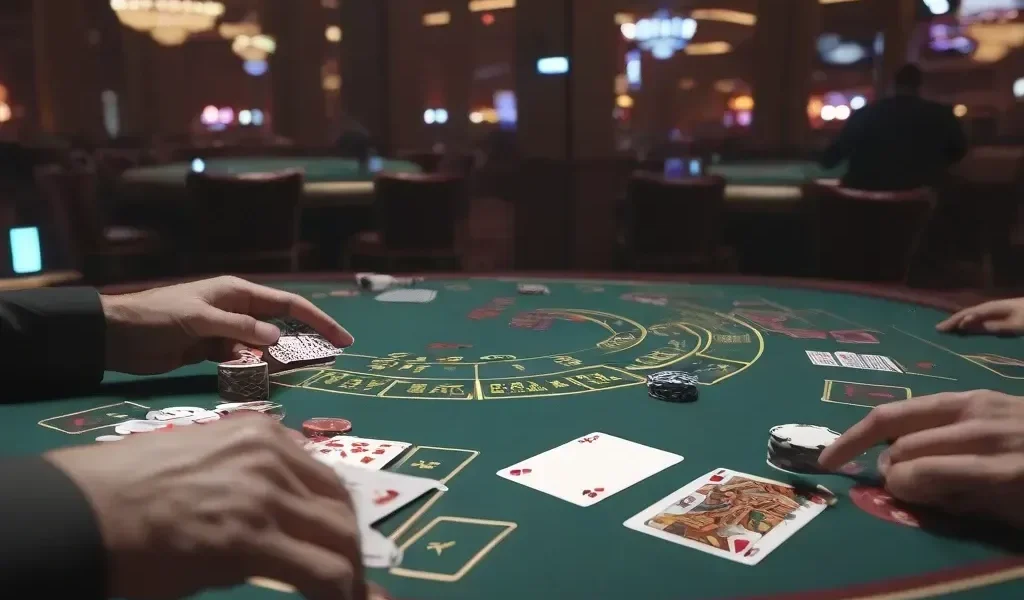
Imagine sitting at a blackjack table with a real dealer shuffling cards, all from your living room. That’s the raw appeal of live dealer games—a direct shot of authenticity that traditional RNG-powered slots just can’t touch. These aren’t your standard automated spins; they’re real-time gaming sessions where human interaction and actual cards swap the cold algorithm for a tangible casino experience. The shift from random number generators to live streams doesn’t just change the visuals—it rebuilds trust. No more wondering if the software is rigged. You see the shuffle, watch the deal, and feel the immersion. This bridge between physical and digital casinos has fundamentally transformed player engagement, turning a solo screen session into a shared, social event. And it’s not just about nostalgia—it’s about elevating the whole online casino vibe.
The Technology Behind Live Dealer Games
When you join a live blackjack table, the magic isn’t random—it’s a tightly choreographed ballet of hardware and software. The core technologies that make it happen are HD video streaming, multiple camera angles, optical character recognition (OCR), and purpose-built studios that sync real-world action with the digital interface you see on your screen. Instead of a Random Number Generator (RNG) deciding your fate, you’re watching a real dealer shuffle, cut, and deal actual cards. That alone kills the skepticism players often have about fairness.
Here’s how a typical setup flows: a real dealer stands in a studio fitted with broadcast-quality cameras. Every angle is captured—close-ups of the shoe, wide shots of the table, overhead views for dealer hands. That video stream is compressed and sent to your device with sub-second latency—often under 200 milliseconds, sometimes as low as 50ms in top-tier networks. Providers like Evolution Gaming go further, using three to five camera angles so you can switch views or zoom in on the action. Meanwhile, every card dealt is tracked by OCR and instantly displayed on your screen. This technology eliminates the “is the RNG rigged?” doubt. You see the actual card, the software reads it, and your balance updates in real time. It’s analog action, digitized without losing the human element.
Streaming and Studio Infrastructure
These studios are not just rooms with a table. They’re soundproofed, professionally lit, and often have a pit boss overseeing multiple tables at once. Evolution’s Riga studio, for example, spans over 50,000 square feet and houses dozens of tables, each with its own camera rig, lighting setup, and dealer station. The broadcast infrastructure uses dedicated fiber lines to keep the video feed clean and low-latency. HD streaming at 1080p or even 4K requires massive bandwidth, so studios compress data using advanced codecs, ensuring your game doesn’t lag or pixelate—even if your internet hiccups.
Optical Character Recognition and Data Sync
Think of OCR as a super-fast scanner that reads every card the moment it lands on the felt. The camera captures the card’s rank and suit, the software identifies it in milliseconds, and that data is sent to the game engine. This is what allows the interface to update your balance, display the dealer’s hand, and show game history instantly. The sync is almost seamless—the digital overlay mirrors the physical table to the pixel. Without OCR, live dealer games would be just a video feed with manual input, prone to errors. Instead, it’s a real-time data loop that makes you feel like you’re sitting at a casino table, minus the drive.
How Live Dealers Build Trust and Credibility
One of the biggest questions players ask is: Are live dealer games rigged? It is a fair concern, given the abundance of shadowy algorithms in standard digital slots. However, the entire architecture of live dealer gaming exists to demolish that doubt. Because the action is streamed directly to your screen, witnessed by your own eyes in real time, the opportunity for manipulation becomes virtually impossible. You are not trusting a black box; you are watching a human being handle physical cards or a real spinning wheel. Reputable casinos operating these tables are not fly-by-night operations. They are chained to strict licensing frameworks, often from the UK Gambling Commission or the Malta Gaming Authority, which conduct frequent, unannounced audits. Consider this: In 2023, a major audit of Evolution Gaming’s live tables found zero anomalies. Zero. The equipment is independently tested for randomness and integrity, much like a slot machine in a brick-and-mortar casino. This transparency is the bedrock of trust. You can literally watch the dealer shuffle the deck and deal the cards, a process that leaves no room for secret software interference. That raw, unfiltered visual proof is far more convincing than a random number generator you simply have to accept on faith.
Regulatory Oversight and Certification
Regulatory oversight and certification are the silent guardians of live dealer fairness. Licensing authorities like the UK Gambling Commission (UKGC) and Malta Gaming Authority (MGA) impose rigorous standards. Third-party auditors like eCOGRA then step in to verify everything works as claimed. Look for their logos on the casino site; they are non-negotiable seals of approval. Furthermore, the human element is screened too. Live dealers undergo extensive training and background checks to ensure they are both competent and honest, further reducing any risk of foul play.
Player Interaction as a Trust Signal
Player interaction acts as a powerful trust signal, transforming a sterile transaction into a human experience. I once played a live roulette game and asked the dealer to spin the wheel a certain way – she smiled and did it. That moment of human connection made the experience feel authentic, not robotic. You can also witness the physical shuffle and cut of the cards, an act that is impossible to fake convincingly. Using the chat feature to request a specific action and seeing it happen is real-time verification that you are in control of a genuine event, not a pre-recorded loop or a rigged program.
The Immersive Experience: Social Interaction and Realism
Slots are solitary; live dealer games are communal. That’s the stark difference. While RNG-powered games leave you staring at a screen in silence, a live dealer studio is buzzing with energy. You get the banter with the dealer, the silly comments from other players via the chat box, and the actual sound of cards being shuffled. It’s a messy, chaotic, and deeply human experience. A recent survey found that 78% of players say these live games make them feel more engaged than standard RNG alternatives. You aren’t just clicking a button; you are in the room. And here is a tip: use the chat to ask the dealer for a lucky hand. It feels silly, but it adds a personal touch and breaks the coldness of the machine. Many studios now also push ‘game show’ style games like Monopoly Live or Dream Catcher, which throw a live host together with a spinning wheel of fortune. The result is less a casino and more a live comedy show where you might win money.
The Role of the Dealer as Host
Don’t mistake a dealer for just a card pusher. These professionals are the heart of the live experience. The selection process is brutal; dealers undergo weeks of grueling training in game rules, customer service, and camera presence. They are performers. Dealer Anna from my favorite blackjack table always remembers regulars and jokes about bad beats. She makes the loss sting less and the win feel personal. That entertainment creates a connection you can’t find against a random number generator.
Game Show Evolution and Novelty
Innovation here is relentless. Crazy Time, Lightning Roulette, and Mega Ball all combine RNG bonuses with a live host. It’s a weird hybrid that works. Most of these games are exclusive to live dealer studios, not found on standard slot platforms, and often they come with higher RTPs. You get the thrill of a TV show with the payout of a table game.

Strategic Advantages for Players
Live dealer games are a strategic shift from RNG play. Here are three strategies you can apply today.
First, optimize table selection. Start with lower minimum bets to stretch your playtime and remove the pressure of chasing quick losses.
Second, adjust your bankroll. The slower tempo allows slightly bigger bets per hand, provided your session limits are strict.
Third, never underestimate etiquette. Polite chat goes a long way. Dealers appreciate the courtesy and often offer more engagement.
A practical tip: avoid packed crowds when learning a new variant. Dealers give more attention to fewer players.
The bottom line is the slower pace is your friend. Unlike RNG blackjack where hands fly by, a live round gives you genuine time to calculate.
Managing the Pace and Patience
A typical live round takes 30 to 40 seconds. This is your biggest asset. You can calculate odds, observe other players, and think through the dealer’s upcard. Use the extra time to double-check your bets. Patience here is active, allowing you to verify your math before the action heats up.
Leveraging Dealer Tendencies
There’s a subtle psychology in every live session. A friendly dealer puts you at ease, preventing tilt. A rushing dealer might subtly push you to speed up your decisions. Recognizing these tendencies is about curating your own mindset and maintaining control over your mental state at the table.
The Future of Live Dealer Gaming
Imagine putting on a VR headset and walking up to a virtual blackjack table where a real dealer appears as a hologram. This is no longer science fiction—it’s the future of live casino gaming taking shape right now. Industry leaders like Evolution are already testing VR live dealer environments, pushing the boundaries of immersion. Mobile-first optimization is another game-changer; most live dealer games are now fully optimized for smartphone screens, with touch-friendly controls that make betting feel intuitive. AI is quietly revolutionizing the experience too. Soon, artificial intelligence could help dealers remember your name, your game history, and your drink preference, creating a personalized VIP atmosphere right from your living room. The numbers back the hype—the global live casino market is projected to grow at a steady 12% CAGR through 2030. It’s a wild ride, and the technology is only getting faster, smarter, and more human.
Virtual Reality and Haptic Feedback
Early prototypes are already mind-blowing. In these demos, players use hand controllers to physically push chips across the table and pick up cards, feeling a buzz of haptic feedback with every move. But full adoption? Still a few years out. The biggest hurdle is hardware cost—quality VR headsets remain expensive for the average player.
Mobile and Cross-Platform Play
Here’s the hard truth: a choppy stream ruins the vibe. Make sure your Wi-Fi is stable—a wired connection is actually best for uninterrupted play. Many casinos now offer dedicated live dealer apps, allowing you to switch from your laptop to your phone mid-session without missing a beat. 5G streaming is making that possible, bringing casino floors wherever you go.
Conclusion
Live dealers have flipped the script on online casinos. Cold algorithms? Gone. Robotic spins? Boring. What you get now is a warm, breathing, interactive experience that feels like the real thing—minus the cigarette smoke and the awkward guy breathing down your neck. Trust builds naturally when you see a human shuffle the deck. Immersion hits different when you can chat with a dealer in real time. The benefits are plain as day: transparency, social interaction, that electric thrill of a live table. So stop overthinking. Log into your favorite casino, find a live blackjack table, and see for yourself why millions of players are making the switch. The cards are waiting. Deal yourself in.