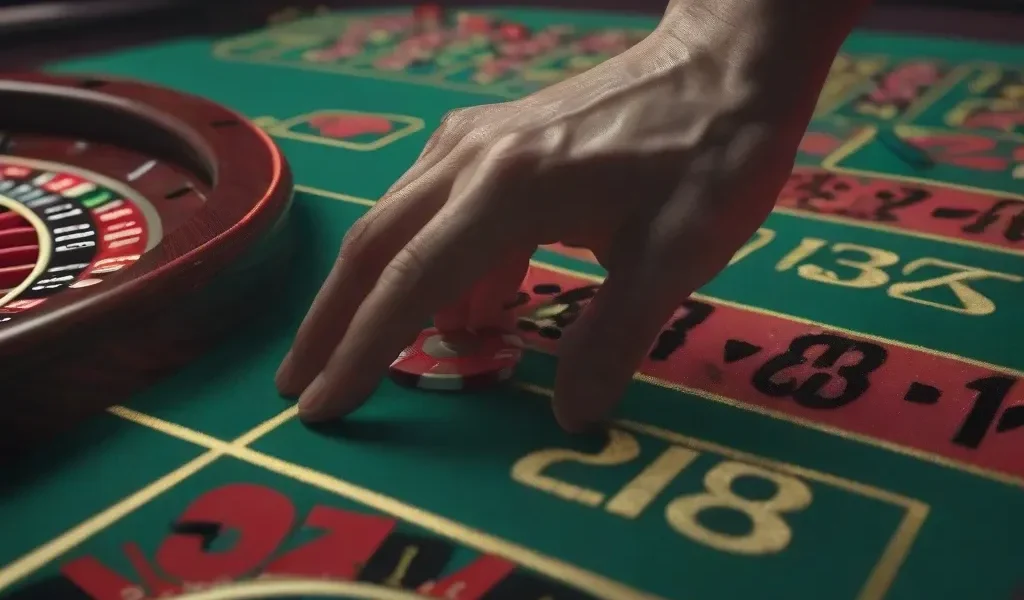
You’ve seen the ads—a simple system that guarantees wins. It’s a lie. I fell for it once, hard. That Martingale trap? Doubled down after every loss until a $500 night evaporated in 45 minutes. The promise is seductive: outsmart the math, beat the house. But here’s the ugly truth no flashy YouTube guru tells you: every betting system, from Fibonacci to Labouchere, is mathematically built to eventually destroy your bankroll. The house edge isn’t a bug—it’s the whole game. And no sequence of wagers can rewrite that equation. Today I’ll show you why systems fail and what to do instead. Forget chasing patterns; you need cold, boring bankroll management. That’s the only strategy that actually works. Because gambling isn’t about winning—it’s about not losing everything in one night. Ready to stop believing the hype?
The Allure of Betting Systems
There is always that one friend. You know the one. He swears by the Fibonacci sequence at the blackjack table, convinced that a mathematical formula from the 13th century is the key to beating the house. The system itself is almost irrelevant. It is the feeling of having a plan that matters. The brain craves order in a chaotic environment. Having a structured betting progression provides a deep psychological comfort, a shield against the raw randomness of the game. It is a cognitive crutch. This is where the gambler’s fallacy and the illusion of control merge into a dangerous cocktail. You remember the one time the Martingale system worked beautifully, doubling your bet after a loss to recoup everything. That memory sticks. The other fifteen times you hit the table limit and lost your entire bankroll? Those are conveniently forgotten. That is confirmation bias in action. A client once walked into a casino with a system he called “foolproof.” He was playing the Martingale at a $10 minimum table. He was all smiles after three wins. Then the losing streak hit. Seven consecutive losses. His “foolproof” plan evaporated in 15 minutes, taking his entire $1,500 budget with it. The system promised control. Reality delivered chaos.

Common Betting Systems Analyzed
Every so-called “sure thing” at the casino is built on a fragile foundation. These betting systems look clever, they feel mathematical, and they promise a slow, steady climb to profit. But peel back the veneer, and you will find the same fatal flaw: a mechanism that, under the pressure of real odds, guarantees you will eventually lose. Understanding exactly why they fail—down to the numbers—is the only way to stop yourself from falling for the illusion. Let’s break down three of the most popular, and watch them crumble.
The Martingale System
How it works: This is the simplicity trap. Every time you lose a bet, you double your next wager. The logic? Your first win will recover all previous losses, plus a single unit of profit. You start with $10. Lose? Bet $20. Lose again? $40. It feels like an unstoppable force, until it hits an immovable object.
Concrete example with real costs: At a $10 minimum table with a $500 limit, the math is brutal. After one loss, you’re down $10. After three, $70. After seven consecutive losses, you are betting $640 just to win back your losses and make a $10 profit. The total cash you have risked at that moment is $10 + $20 + $40 + $80 + $160 + $320 + $640 = $1,270. And if that seventh bet wins? You walk away with a net $10. The risk-to-reward ratio is insane.
Why it fails: The system crushes you with two factors: table limits and bankroll constraints. Blackjack has roughly a 1% chance of a seven-hand losing streak. That sounds small, but it happens relentlessly. A gambler can hit that streak in 20 minutes of play. “I’ve seen people blow their entire bankroll in 20 minutes chasing a single win,” and the math proves they never stood a chance. The formula is simple: after N losses, your total loss = initial bet × (2^N – 1). For a $10 base and 7 losses, that’s $1,270. The house edge stays exactly the same—the system just accelerates your risk of catastrophic loss.
The Fibonacci System
How it works: Named after the famous number sequence (1, 1, 2, 3, 5, 8, 13…), this system is often called a “safer” progression. After a loss, you move one step forward in the sequence. After two wins in a row, you move back two steps. The idea is to recover losses gradually, without doubling your bet violently like the Martingale. It feels controlled, almost gentle.
Roulette example and the ugly reality: You bet $5 on red. Lose. Next bet, $5 again (the second “1” in the sequence). Lose. Now bet $10. Lose. Then $15. Lose. Suddenly, you’ve lost five hands in a row, and your next bet is $40. The progression escalates quickly. A gambler once used this on a $5 base and played for an hour, feeling clever. Then came a 10-loss streak. The sequence ran: 5, 5, 10, 15, 25, 40, 65, 105, 170, 275. Total loss? Over $1,000. And here’s the hidden sting: even when you win, the system doesn’t recover all your losses. It just gives you a partial refund. The flaw is that a long losing streak still forces enormous bets, and because you don’t double, you don’t even recoup everything when you win. The house edge eats the difference.
The Labouchère (Cancellation) System
How it works: Write down a sequence of numbers, like 1-2-3-4. Your bet is the sum of the first and last numbers. So, you bet 1+4 = 5 units. If you win, you cross off those two numbers. If you lose, you add your bet amount to the end of the line. The goal is to cancel out the entire line. It feels like you are chasing a target, not the chaos of chance.
Indefinite line expansion: Start with line 1-2-3. Your first bet is 1+3 = 4. Lose. Your line becomes 1-2-3-4. Next bet: 1+4 = 5. Lose. Line: 1-2-3-4-5. Bet: 1+5 = 6. Lose. Line: 1-2-3-4-5-6. After five consecutive losses, you have a line that reads 1-2-3-4-5-6-7-8. Your next bet is 1+8 = 9 units. You are now risking 9 units to eventually win back a very small net profit—and you need a massive winning streak to cancel the line. This is the fatal flaw. The system is a psychological trick. It does not alter the odds. It does not reduce the house edge. It just creates an illusion of control by organizing your bets. In reality, it is a negative progression system that grows infinitely during losing runs, and the casino’s patience and your bankroll will break first.
The Hard Truth: Why Systems Fail Mathematically
Let’s get this straight right now: every single gambling game you will ever encounter in a casino is built on one unshakable foundation—a negative expected value. That’s not a guess, it’s not a maybe, it’s a mathematical certainty. The house edge isn’t some sneaky trick; it’s the core architecture of the game. And here’s the kicker: no betting sequence, no matter how clever or complex, can ever alter basic probability or overcome that built-in disadvantage.
Think about a simple coin flip. In a fair world, heads and tails each have a 50% chance. You bet $10, you win $10. That’s a break-even game. But a casino? They’ll pay you $9.50 on a win. Suddenly, your expected value per flip is negative: 0.5 x $9.50 minus 0.5 x $10 equals a loss of 25 cents every single time you flip. That’s the house edge in action, and it’s unavoidable. Now throw in the gambler’s fallacy—the idiotic belief that past results affect future spins. Roulette wheels have no memory. The ball doesn’t know it landed on black five times in a row. Each spin is an independent event, probability resets to zero every time.
Take the Martingale system, the most famous of the “sure things.” You double your bet after every loss, thinking you’ll eventually win back everything plus a tiny profit. Sounds flawless until you look at the math. You win small, often. But when you lose—and you will—you lose big. And that big loss wipes out all your previous tiny wins. The expected value remains stubbornly negative. In American roulette, with its 5.26% house edge, the casino’s mathematical advantage is baked into every spin of the wheel. A table showing the house edge isn’t optional; it’s the whole story.
I once knew a mathematician friend who got so annoyed hearing people swear by their “systems” that he ran a Monte Carlo simulation. Ten million spins. Every known betting strategy thrown at it. The result? Every single one bled money into the casino’s pockets over the long haul. The graphs all trended downward. The systems only shifted when you lost, not if. You can’t beat the math—the casino always has the edge. And pretending otherwise is just an expensive form of self-deception.

The Exception: Systems in Skill-Based Betting
Where Edge Meets Math in Sports Betting and Poker
Look, most betting systems are garbage wrapped in glitter. They promise the moon but deliver bankruptcy. But here’s the twist—sports betting and poker are different animals. They’re games ofskill*, not pure chance. When you actually have an edge—when your knowledge beats the odds—systems become your survival kit. They don’tcreate* an edge, but they sure as hell manage the chaos.
In sports betting, the Kelly Criterion is your cold, hard friend. It sizes your bet based on your perceived edge. Here’s the raw math from Kelly himself: bet size = (bp – q) / b. Whereb* is the decimal odds minus 1,p* is your true probability, andq* is 1 minusp*. Example—you think a team wins 60% of the time, but the odds suggest only 50%. That’s your edge. Kelly says bet about 20% of your bankroll on that play. You’re not guaranteed a win today, but over the long haul, this formula maximizes your bankroll growth like a steady tractor pulling a heavy load.
But here’s where it gets messy. Most recreational bettors overestimate their edge. They think they’re geniuses when they’re just lucky. I once tracked my sports bets for a full year—sweated every game, logged every slip. I had a solid 55% win rate, which sounds decent. But without the Kelly system, I’d have gone broke during a nasty cold streak in November. The system forced me to scale down my bets when the cards weren’t falling. Poker bankroll management works the same way—you don’t bluff your whole stack on a marginal hand.
So yeah, systems in skill-based betting don’t hand you wins. They hand youcontrol* over variance. Use them, but keep your ego in check.
The Real Winning Strategy: Bankroll Management & Discipline
Forget everything about hot streaks and betting systems that promise guaranteed wins. The only sustainable path to long-term profitability is a boring, mechanical approach built on strict bankroll management and emotional control. Variance is a beast—it will crush you if you let it. You must accept losses as a normal, unavoidable part of the game. Period.
Here is the only framework that works. Do it step-by-step, no shortcuts. First,*determine your total bankroll**—money you can afford to lose, completely separate from your rent and groceries. Next,*set a fixed unit size**. This is your bet amount—keep it between 1% and 2% of your total bankroll. A $10,000 bankroll means $100 to $200 per bet. Boring, yes. Effective, absolutely. Third,*define a hard stop-loss**. For example, stop betting entirely after losing 20% of your bankroll in a single day or week. Walk away. No chasing. Finally,*keep records of every single bet**. Track the sport, the odds, the stake, the outcome, and your current bankroll balance. Data removes emotion.
Let’s get real with examples. I know a professional poker player who uses exactly 1% units. He has never—and I mean never—had a losing year in a decade. It’s not luck; it’s discipline. Contrast that with a client who thought he was smarter than the system. He ignored bankroll rules, chased losses using the Martingale method, and torched his entire $5,000 bankroll in two weeks. Gone. That’s what happens when discipline goes out the window.*Your immediate checklist:**
– Calculate your total gambling bankroll today.
– Decide your unit size (1% to 2%).
– Write down your daily or weekly stop-loss number.
– Open a simple spreadsheet or notebook for your bet log.
– Commit to stopping when you hit your stop-loss.
Do this. It’s not flashy. It works.
Conclusion: The Final Verdict
Let’s cut through the noise. Betting systems? They’re distractions—shiny traps peddled to gamblers desperate for a shortcut. The math doesn’t lie, and neither does the house edge. For any chance at long-term success, you need to ditch the fantasy and focus on three hard truths.
First, understand the math. Every spin, every hand, every roll operates on fixed probabilities. No system bends that. Second, forget progression systems for casino games—Martingale, Fibonacci, whatever. They’ll drain your bankroll faster than a slot machine on a tilt. Third, if you have a genuine edge in skill-based bets like poker or sports, use the Kelly Criterion to size your wagers. It’s the only mathematically sound approach to growth without blowing up.
That’s your real gambling advice: smart betting isn’t about patterns or streaks. It’s about discipline, bankroll management, and refusing to chase. Systems are scams dressed in spreadsheets. Next time you’re tempted by a system, run the numbers first. Better yet, invest that effort into learning bankroll management. I’ve been there, chasing the magic formula—trust me, discipline beats any system. Period.